Water Offsets Ltd
Integrated AI-Driven Catchment Platform for Planning-Led Water Resilience
Integrated AI-Driven Catchment Platform for Planning-Led Water Resilience

Details:
- Company: Water Offsets Ltd
- Client: Mexico Govenrment
- Year: 2026
- Region: Global
Service areas:
- Environmental and sustainability services
- Artificial intelligence (AI) and software solutions
- Digital twins
Introduction
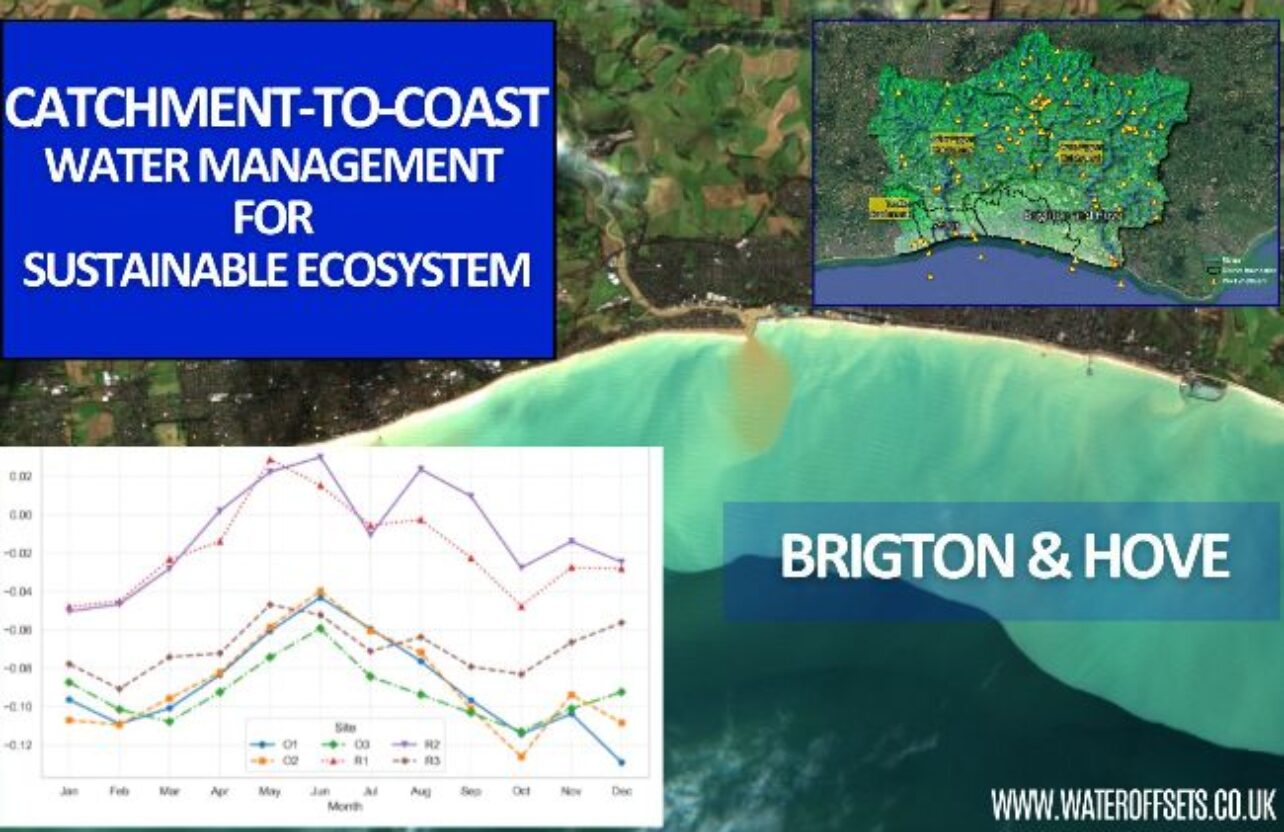
WaterSPHERE is a planned AI-driven catchment intelligence platform designed to support planners, developers, and environmental teams with a single, interactive view of water systems. The platform integrates satellite Earth observation, environmental sensors, land-use data, wastewater discharges, and the performance of WaterOffsets’ intervention tools, including Rainmaker10, NANRO, and RiverClean360, into one spatial environment. By combining data integration, modelling, and machine-learning-based interpretation, WaterSPHERE is intended to make complex water and environmental information accessible to non-technical users, enabling evidence-led planning, transparent decision-making, and scenario testing at both site and catchment scale.
Challenges
Planning decisions related to water neutrality, water quality, and environmental resilience are often made using fragmented evidence. Monitoring data is spatially sparse, satellite imagery varies in resolution and timing, and operational information—such as greywater reuse, treatment performance, or river interventions—is rarely viewed alongside land-use change and development pressure. This fragmentation limits planners’ ability to understand conditions across an entire catchment, identify the drivers of pollution or stress, and assess how new development or mitigation measures will interact. Traditional modelling tools can be complex, slow, and inaccessible to non-specialists, making them difficult to use during plan-making, application review, or community consultation. There is a clear need for an integrated, transparent digital system that brings multiple datasets together, explains environmental pressures clearly, and supports forward-looking planning decisions.
Solutions
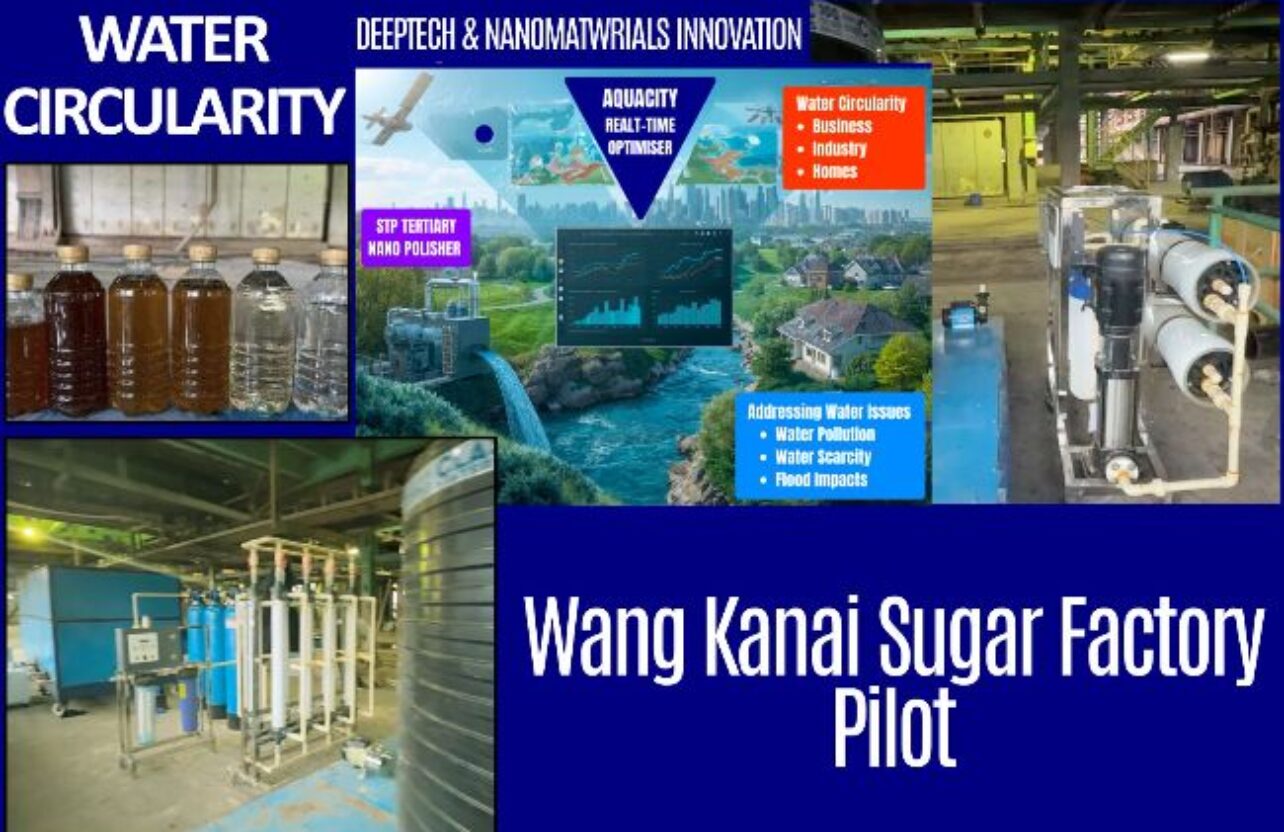
WaterSPHERE is designed to integrate multiple datasets into a single, continuously updating catchment map. Satellite imagery, rainfall and soil-moisture data, river sensors, land-use mapping, wastewater discharges, and intervention data are harmonised using AI techniques that align spatial and temporal differences and fill data gaps. The platform incorporates WaterOffsets’ solution ecosystem: Rainmaker10 data to represent demand reduction and greywater reuse impacts, NANRO to model advanced treatment and pollutant reduction potential, and RiverClean360 to assess river-scale monitoring and restoration scenarios. Machine-learning models estimate water quality between monitoring points, identify dominant pressure sources, and summarise results in plain language. Lightweight predictive models enable rapid “what-if” testing of development growth, nature-based solutions, reuse systems, and climate variability.
Results
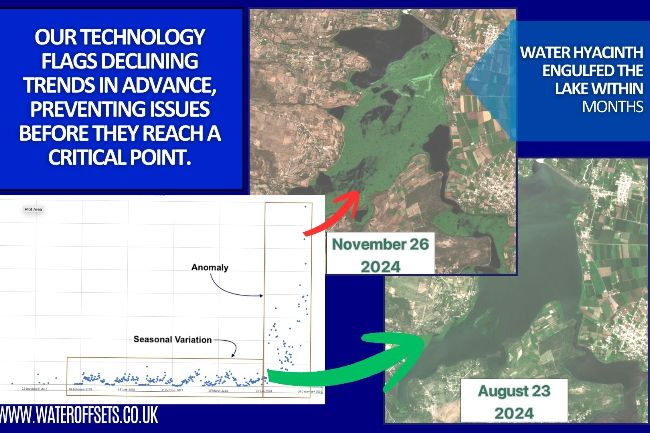
The integrated outcome is a planning-focused digital platform that provides near-real-time visibility of water conditions across an entire catchment. Users can see current water quality, understand the likely causes of deterioration, and explore how interventions such as Rainmaker10, NANRO treatment, or RiverClean360 restoration could improve outcomes. Scenario testing allows planners to compare alternatives before committing to policy, design, or investment decisions. Anomaly detection highlights unexpected changes or risks, supporting early response. Transparency is reinforced through confidence indicators that explain data coverage and uncertainty. An optional conversational Agentic AI layer further broadens accessibility, enabling users to ask natural-language questions and receive clear, human-readable answers. Together, these capabilities position WaterSPHERE as a scalable digital planning tool for water neutrality, environmental resilience, and informed spatial decision-making.