
Details:
- Company: Space Syntax
- Client: City of Nur-Sultan
- Year: 2019
- Region: Global
Service areas:
- Planning and urban design services
- Plan-making, planning application and data management systems
Introduction
An award-winning urban plan, created using a ‘data-driven design’ approach, to improve, intensify & grow the capital city of Kazakhstan.
Having won an international design competition in 2018, Space Syntax led an international, multi-disciplinary design team to apply a unique, outcomes-focused and evidence-based approach to the creation of a masterplan for the development of Nur-Sultan, the capital city of Kazakhstan.
Having won an international design competition in 2018, Space Syntax led an international, multi-disciplinary design team to apply a unique, outcomes-focused and evidence-based approach to the creation of a masterplan for the development of Nur-Sultan, the capital city of Kazakhstan.
Challenges
The design process involved the use of Space Syntax Integrated Urban Models to address a series of key questions:
– what should Nur-Sultan be like in 2030 in terms of Liveability, Sustainability and Health objectives?
– what is it like now?
– how should its physical and spatial infrastructure change to meet these objectives?
– how are these changes likely to work?
– what should Nur-Sultan be like in 2030 in terms of Liveability, Sustainability and Health objectives?
– what is it like now?
– how should its physical and spatial infrastructure change to meet these objectives?
– how are these changes likely to work?
Solutions
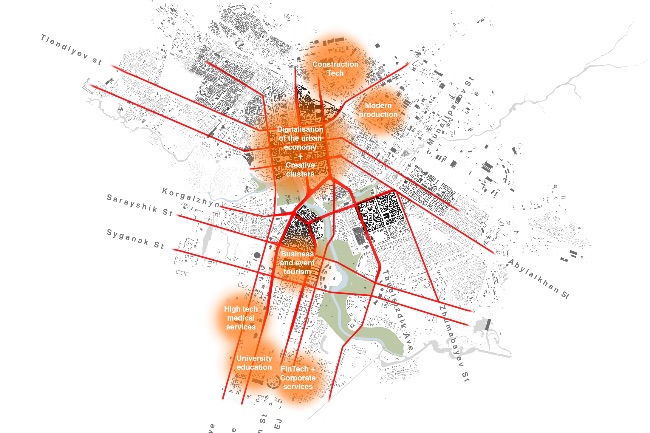
The masterplan creates a comprehensive set of proposals for the physical development of the city, enabling it to deliver a future vision, shaped by local stakeholders, of becoming a liveable, sustainable and healthy city. The proposals cover three scales: city-wide strategies, opportunity area masterplans and local, tactical interventions.
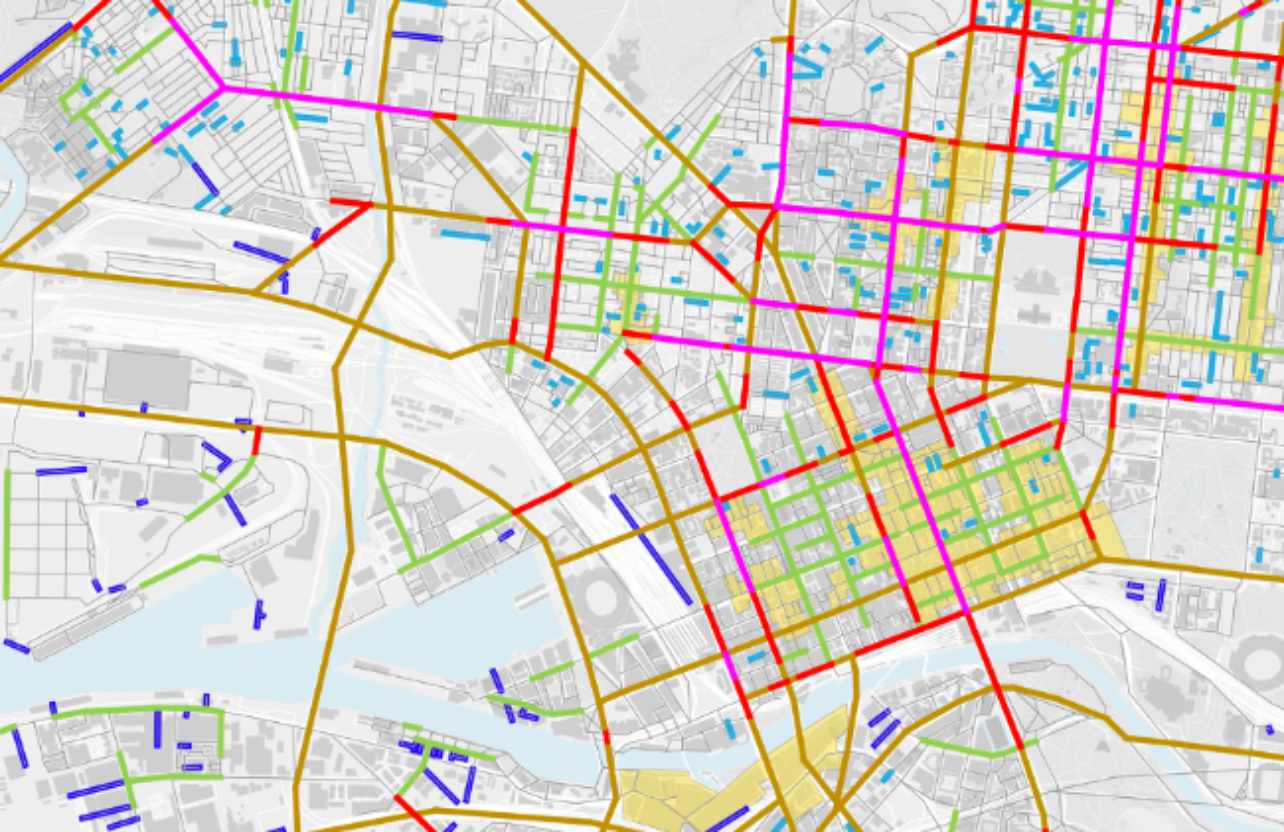
City-wide strategies use forecasts of population and employment growth to improve and intensify the city in key areas before extending it.
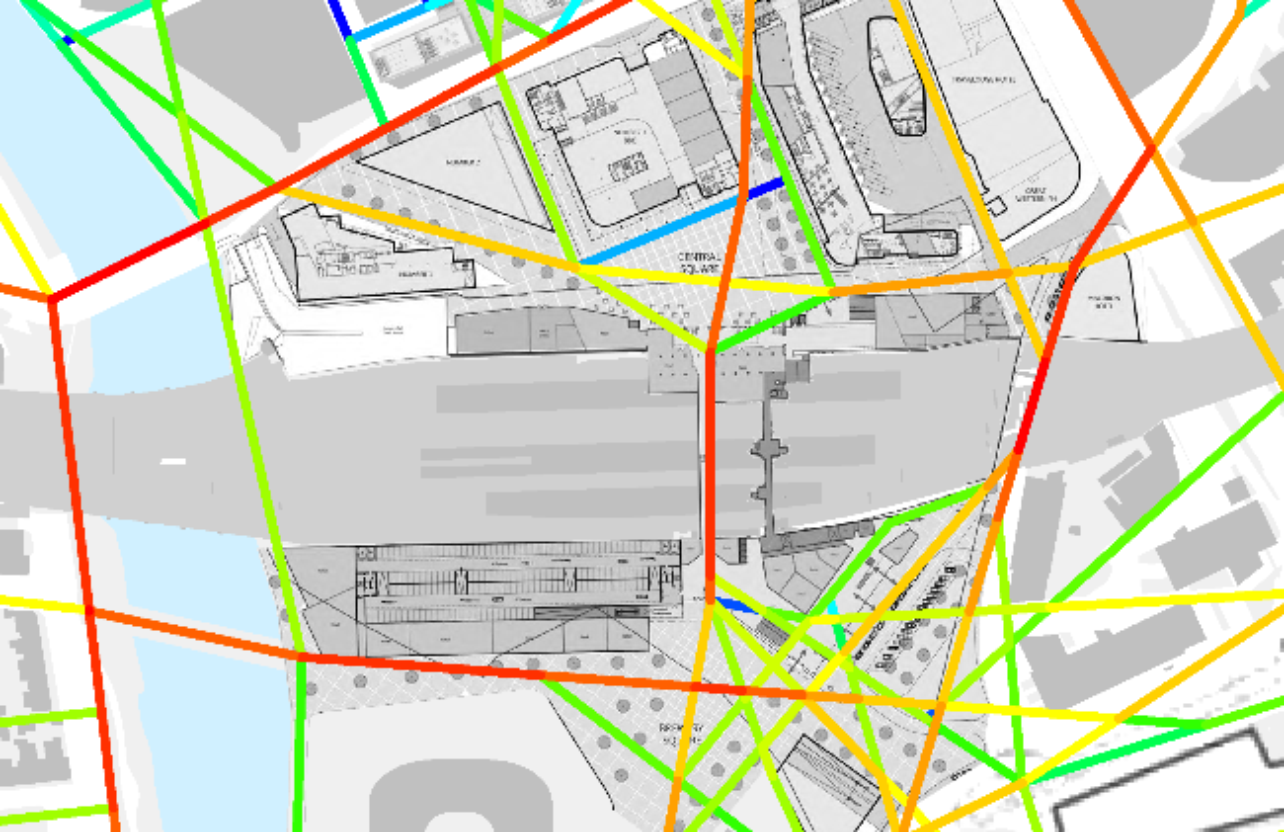
In considering how to accommodate growth, a series of Opportunity Area Masterplans were developed. Detailed proposals for these areas were created with the intention that they also provide the opportunity to introduce new models of development into the city, including private-led redevelopment, public-private regeneration, and public-led improvement.
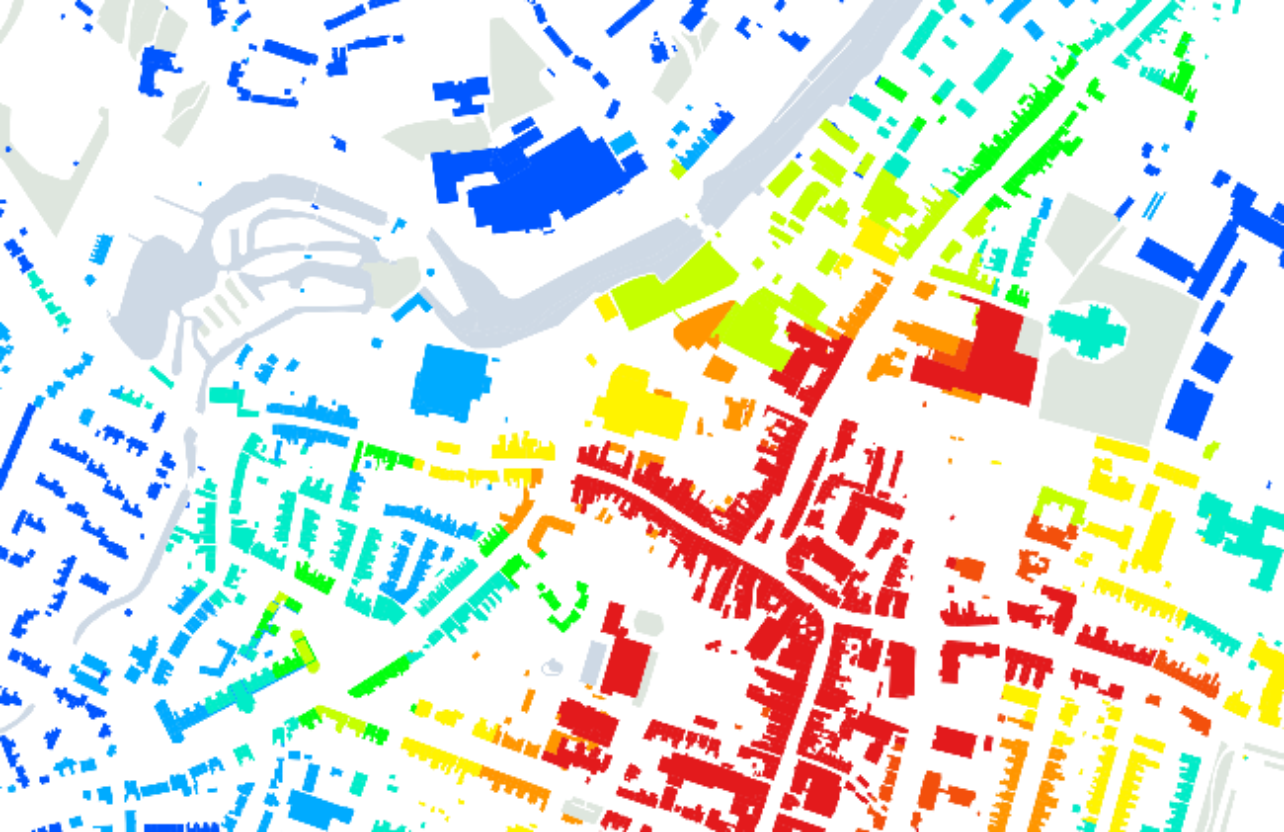
To help the city to efficiently deliver these, Space Syntax created a bespoke GIS Plugin, allowing city users to access advanced analytic tools, to ultimately deploy improvements at scale across the city.
City-wide strategies use forecasts of population and employment growth to improve and intensify the city in key areas before extending it.
In considering how to accommodate growth, a series of Opportunity Area Masterplans were developed. Detailed proposals for these areas were created with the intention that they also provide the opportunity to introduce new models of development into the city, including private-led redevelopment, public-private regeneration, and public-led improvement.
To help the city to efficiently deliver these, Space Syntax created a bespoke GIS Plugin, allowing city users to access advanced analytic tools, to ultimately deploy improvements at scale across the city.
Results
The 2030 masterplan demonstrates how the key objectives can be delivered through a set of development proposals, with scenario modelling showing that:
– liveability is improved by enabling 20% more residents to walk to key services such as education and health facilities, by activating parks and the public realm as a series of vibrant social spaces, and by using urban form and massing to create a comfortable environment at street level.
– sustainability is improved through the development of policy roadmaps that enable the city to reach its emission and re-cycling rates, and through the application of technologies such as renewable energy generation and SUDS to opportunity areas.
– the city creates the conditions to enable healthy lifestyle by supporting daily activity, reducing average car-dependence by 10%, with some parts of the city now offering access to equal amounts of employment by active and public transport as by car.
– liveability is improved by enabling 20% more residents to walk to key services such as education and health facilities, by activating parks and the public realm as a series of vibrant social spaces, and by using urban form and massing to create a comfortable environment at street level.
– sustainability is improved through the development of policy roadmaps that enable the city to reach its emission and re-cycling rates, and through the application of technologies such as renewable energy generation and SUDS to opportunity areas.
– the city creates the conditions to enable healthy lifestyle by supporting daily activity, reducing average car-dependence by 10%, with some parts of the city now offering access to equal amounts of employment by active and public transport as by car.
“This is comprehensive, aspirational and far-thinking.”
Judges’ comments
MIPIM/The Architectural Review